In short, How SaaS funding rounds affect product roadmaps and hiring decisions is about one thing: a round forces trade-offs. Quick answer: most seed…
Last updated: October 12, 2026
In short, How SaaS funding rounds affect product roadmaps and hiring decisions is about one thing: a round forces trade-offs. Quick answer: most seed rounds support 1–3 core hires, while a Series A often funds 4–8 hires, depending on runway and burn. A seed round usually buys proof, a Series A buys repeatability, and later rounds buy scale; each stage pushes different product bets and different roles. I write about software strategy and product operations, and the pattern is consistent enough that founders can plan around it instead of reacting to it.
Key Takeaways
- A round usually narrows the roadmap before it expands it.
- Seed funding usually buys faster learning, not a bigger scope.
- Series A is where the roadmap usually becomes more disciplined.
- Funding changes hiring because the company is no longer hiring only to survive; it is hiring to execute a story.
What a funding round really does to a SaaS roadmap
A funding round narrows the roadmap before it expands it. That sounds backward, but it is the real effect. Fresh capital does not mean “build everything.” It usually means the board and investors now expect one clear outcome in the next 12 to 18 months: prove retention, raise activation, expand a market, or prepare for enterprise sales.
That shift matters because a SaaS roadmap is a queue, not a wish list. After a round, features that support the fundraising story move up. If the story is “enterprise readiness,” then SSO, audit logs, SOC 2 work, role-based access, and admin controls suddenly beat nice-to-have UI polish. If the story is “usage growth,” then onboarding, templates, collaboration, and time-to-value matter more than a deep permissions model.
The hidden cost is churn in focus. Teams can treat new capital as permission to start several strategic bets at once, so it is wise to check that plan with a board member, investor, or other qualified professional before expanding scope. That is where roadmaps go wrong. A company with a 12-month runway after the round can still waste 4 months building for two different ICPs. The better move is to tie the roadmap to one investor-grade claim: “this feature reduces sales friction,” or “this one improves net revenue retention,” not “this seems strategically interesting.”
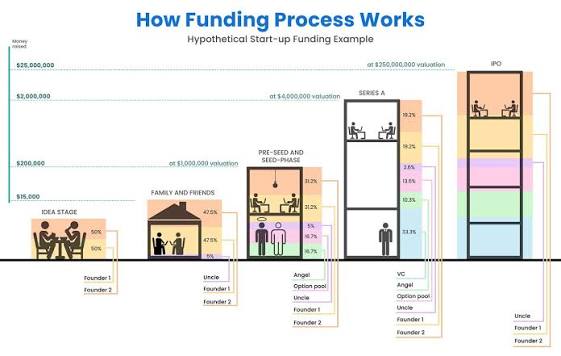
This is also where the round stage matters. Seed money usually funds discovery and product-market fit work. Series A money should tighten the core loop and make the product easier to sell. Series B and beyond often push expansion: integrations, scalability, reliability, and segment-specific packaging. I would be wary of any team that claims the round did not change priorities at all. If nothing changed, the company probably raised too early or had not yet made the hard trade-offs.
How a seed round changes what gets built first
A seed round usually buys one thing above all else: faster learning. That means the roadmap should favor short-cycle work that answers whether the product solves a painful problem for a real customer. In practical terms, I would expect fewer long-platform bets and more work on activation, core workflow, and the smallest set of features that make the product usable.
This is the round where founders often make their first major product mistake: they confuse “investable” with “bigger.” A seed-stage SaaS company does not need the full version of an enterprise suite. It needs enough product to produce evidence. That could mean a basic integration to a system of record, a cleaner onboarding flow, or a reporting view that helps a customer justify the purchase internally. The roadmap should be tied to user behavior and sales conversations.
The weakness of this approach is obvious: short-term focus can create a brittle product. If every sprint is about converting the next demo, the team may skip architecture, code hygiene, or security controls that will hurt later. That is why seed-stage roadmaps need one eye on technical debt. I would not recommend spending seed capital on broad platform work, but I would recommend a small, explicit budget for guardrails: logging, basic observability, and a data model that will not collapse the moment the customer count rises.
Seed funding is wrong for teams whose product already has clear enterprise pull. If customers are asking for procurement reviews, permissioning, and admin controls on day one, a seed roadmap that stays too narrow may lose deals. In that case, even early capital should be used to remove enterprise blockers, not just to chase more signups. In regulated or security-heavy markets, that may mean getting advice from counsel or a compliance specialist before the team locks the plan.
Why Series A usually shifts the roadmap from proving to repeating
Series A is where the roadmap usually becomes more disciplined. At this stage, the question is no longer “can anyone use this?” It is “can this be sold and retained in a repeatable way?” That changes what gets built. Features that reduce friction in sales, onboarding, implementation, and first value often outrank experimental ideas.
A good Series A roadmap often contains three kinds of work: core product improvements, customer-facing trust features, and operating features for the team selling the product. Core product work might mean workflow speed or better collaboration. Trust features might include SOC 2 preparation, SSO, audit trails, and permissions. Operating features might be billing, usage analytics, admin dashboards, or better lifecycle messaging. These are not glamorous, but they are what make revenue repeatable.
The trade-off is that Series A can punish creativity if leaders mistake repeatability for stagnation. A team that only hardens the product can end up with a polished but under-differentiated tool. I would avoid roadmaps that become a wall of “enterprise requests” with no sharp product point of view. Strong Series A companies often say no to many feature ideas that arrive with larger customers, because they know the product has to stay legible.
This stage is also where integrations start to matter more than founders expect. Not every integration is equal. The right one is the integration that shortens sales cycles or improves retention, not the one that merely looks impressive in a deck. If the product sits in a crowded category, the roadmap often should prioritize the systems customers already depend on, such as Salesforce, Slack, Microsoft 365, or a key data warehouse, though the exact choice should be guided by customer data and market fit. If the company cannot say which integration changes revenue, it probably should not build it yet. For a useful benchmark on SaaS retention and growth metrics, see KeyBanc Capital Markets’ SaaS Survey and OpenView’s Product Benchmarks.
How funding changes hiring decisions inside a SaaS company
Funding changes hiring because the company is no longer hiring only to survive; it is hiring to execute a story. That story determines which functions come first. A product-heavy story hires engineers, product managers, and design earlier. A sales-led story hires customer success, solution engineering, and demand gen sooner. A platform or infrastructure story hires senior engineering and security earlier than many founders expect.
The biggest mistake is hiring by pressure instead of by bottleneck. After a round, every team feels under-resourced, so the temptation is to hire across the org chart at once. That creates coordination drag and leaves no function strong enough to move the needle. I would rather see one or two obvious hires tied to the roadmap than five “good to have” hires spread across roles.
Early funding also changes seniority. Before a round, a startup can sometimes get by with generalists. After a round, the company often needs people who have done the next stage before. A first product marketer can sharpen positioning. A finance hire can manage burn and forecasting. A security-minded engineer can unblock larger deals. The catch is that senior talent is expensive in cash and management time, and a weak manager can slow the team more than the missing role would have.
Here is the hard truth: not every funded company should hire more managers. If the product is still changing every month, adding layers of management can freeze decisions. That is why I would choose individual contributors first when the roadmap is still volatile, and hire managers only when the work has become repeatable enough to distribute.
The honest side-by-side
A roadmap after a funding round should be chosen by stage, not by optimism. Seed money, Series A, and later rounds reward different decisions. The table below shows the practical differences I would use when deciding what to build and whom to hire.
| Criteria | Seed round focus | Series A focus | Winner for this condition |
|---|---|---|---|
| Main goal | Prove the core problem is worth solving | Prove the product can be sold repeatedly | Seed for problem discovery; Series A for repeatability |
| Product priority | Activation, onboarding, core workflow | Retention, trust, sales enablement | Seed if users are still getting to first value; Series A if sales is already working |
| Feature philosophy | Fewer features, faster learning | More depth in the winning use case | Seed when the ICP is still changing |
| Technical debt tolerance | Some debt is acceptable if learning is fast | Debt must be reduced before it blocks scale | Series A when support load is rising |
| Hiring pattern | Generalists and builders | Function owners and operators | Seed for speed; Series A for structure |
| Sales support | Founders often carry much of it | Dedicated pre-sales, CS, or product marketing starts to matter | Series A if deal cycles are lengthening |
| Security and compliance | Minimal viable controls | Formal trust work starts to matter more | Series A for larger customers |
| Integration strategy | One or two critical connections | Deeper ecosystem fit | Series A if customers ask about stack fit |
| Runway pressure | Burn must stay tightly controlled | Burn can rise, but with a clear efficiency plan | Seed if market proof is missing |
| Org design | Flat and flexible | More explicit ownership | Seed if direction is still shifting |
What SaaS companies should hire after each round
A funding round should shape hiring in the same way it shapes the roadmap: by the next bottleneck. Seed-stage hiring should usually prioritize product and engineering roles that shorten the path to proof. Series A hiring should usually add the roles that turn proof into a repeatable system. Later rounds should add the roles that let the company scale without breaking.
If I had to simplify the pattern, I would put it this way: seed hires build, Series A hires systemize, later-stage hires scale. That means a seed company might need a strong generalist engineer, a product designer who can improve activation, and a founder who can still sell. A Series A company may need customer success, product marketing, RevOps, security, or a technical account function. A later-stage company often needs deeper leadership in infrastructure, people ops, finance, and segmentation.
The downside of this sequence is that it can turn hiring into a status game. Founders start hiring roles because investors recognize them, not because the company needs them. A first CFO at the wrong time can create overhead without improving decision quality. A first PM before the team has a stable workflow can add meetings, not clarity. I would rather see one concrete bottleneck named next to every opening: “we are losing deals at security review,” or “customers never reach first value without help.”
That discipline also keeps burn honest. Hiring is often the fastest way to turn a funding round into a fixed cost base, so the pace should match the revenue plan and runway. The longer the product takes to mature, the more dangerous that cost becomes. For planning benchmarks on hiring and burn, see U.S. Bureau of Labor Statistics compensation data and Carta’s startup compensation reports.
When the usual pattern breaks
The usual pattern flips in a few situations. First, if the company is in a regulated market, hiring for compliance and security can come earlier than the roadmap suggests. A healthcare, fintech, or legal SaaS may need trust work before growth work because customers will not move without it. Second, if the product is API-first or infrastructure-heavy, technical hires matter more than customer-facing hires for longer. The product may look simple on the surface while hiding a deep engineering requirement underneath.
Third, if the company already has strong organic demand, the roadmap may lean toward scalability and packaging earlier than expected. In that case, the hiring plan may need more support and operations sooner because the product is already pulling the company forward. Fourth, if the round was raised mainly as defensive capital, the smartest move may be to slow hiring and protect runway rather than expand the team immediately.
These exceptions matter because founders often assume money equals acceleration. Sometimes it does. Sometimes it is a brake that lets the company survive long enough to make better choices.
Choose the roadmap that matches the round, not the dream
Choose a seed-style roadmap if the product still needs proof, the ICP is moving, and the company needs fast learning more than scale. Choose a Series A-style roadmap if customers understand the product, sales is becoming repeatable, and the next problem is retention or expansion. Neither if the round was raised without a clear bottleneck, because then hiring and product bets will spread across too many directions.
FAQs
Does a funding round automatically mean a bigger roadmap?
No. It usually means a more selective roadmap. The company should focus on the few product changes that support the stage-specific goal, such as proof, repeatability, or scale.
Should hiring happen before product decisions or after them?
Product decisions should come first. Hiring should follow the bottleneck those decisions reveal. A role that does not map to the roadmap usually becomes overhead.
Why do investors care so much about hiring plans?
Because hiring shows whether the company can turn capital into execution. A clean hiring plan signals focus; a vague one suggests the team has not decided what the money is for.
When should a SaaS company hire its first salesperson?
When the founder can no longer carry enough pipeline alone and the product can be explained consistently. If every sale requires a founder-level rescue, the product probably needs more work first.
Is it ever smart to delay hiring after a round?
Yes. If the team is still validating the core product or the market is unstable, holding back hires can preserve runway and keep decisions tight.
Drafted with AI; not yet reviewed by a person.